Biometric Device Guide 2026: Retail & Telecom Security
A reliable biometric device is now the backbone of secure customer onboarding across telecom stores, banks, and retail chains in Saudi Arabia and Pakistan. In 2026, fingerprint and identity verification are no longer optional add-ons; regulators demand them for SIM activation, payments, and access control. This guide explains how a modern biometric device works, what to look for when buying, and how it fits alongside queuing and point-of-sale systems on a busy service floor.
We draw on real deployments in high-traffic environments where speed, accuracy, and uptime decide whether a branch runs smoothly or grinds to a halt during peak hours.
Why a Biometric Device Is Essential in 2026
Identity fraud, SIM-swap scams, and unauthorized access cost businesses across the region millions each year. A quality biometric device closes those gaps by tying every transaction to a verified fingerprint rather than an easily copied ID card. For telecom retailers in Riyadh, Lahore, or Karachi, that verification is a legal prerequisite for activating a connection.
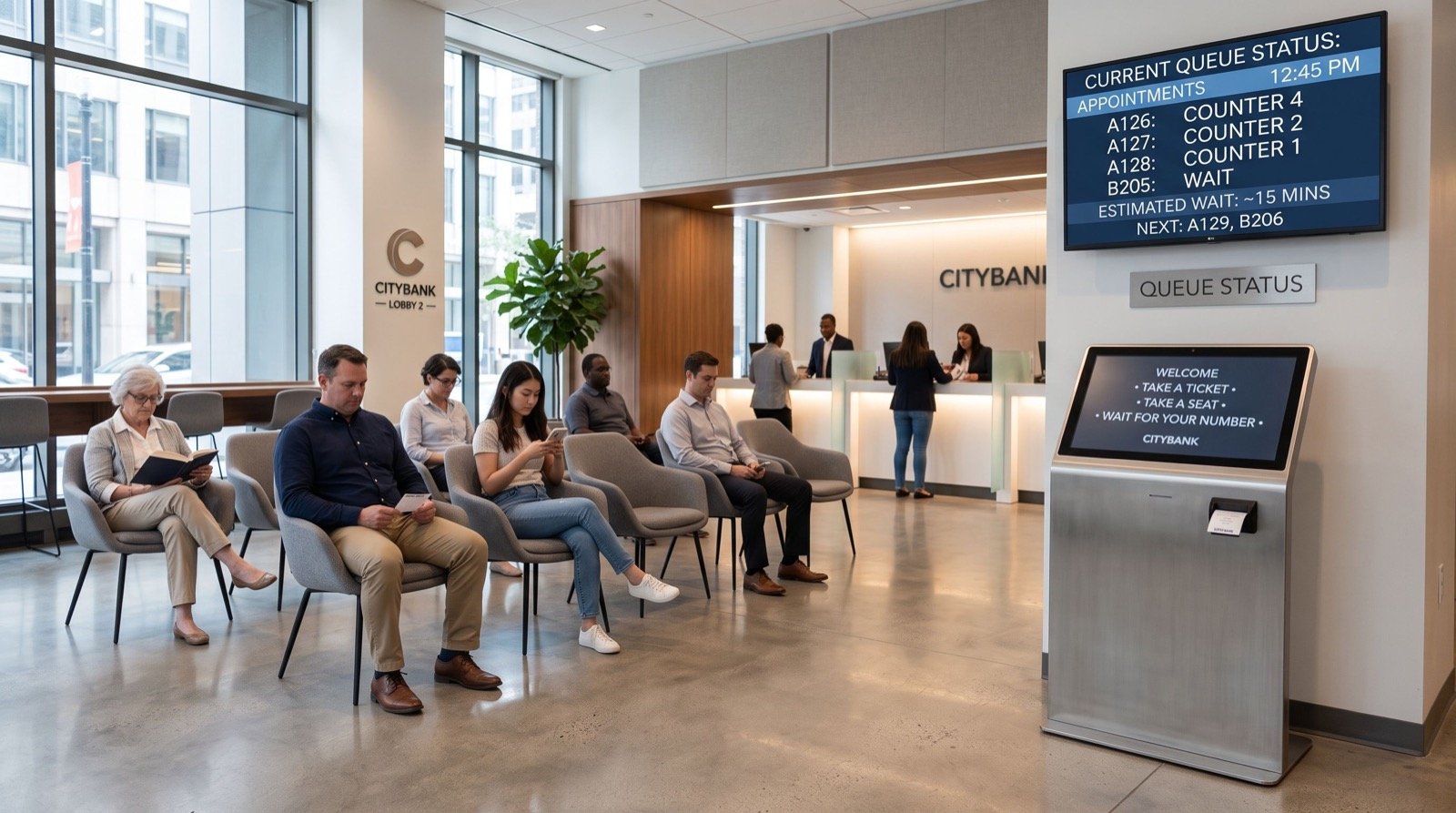
Beyond compliance, biometrics speed up service. A single fingerprint scan replaces manual document checks that used to take minutes. When paired with a queue management system in saudi arabia, the customer’s identity is verified the moment they reach the counter, eliminating duplicate data entry and shrinking transaction times.
Compliance and Accuracy Together
Modern optical and capacitive sensors capture usable prints even from worn or dry fingers, a common problem in dusty retail settings. According to guidance from the U.S. National Institute of Standards and Technology (NIST), sensor image quality is the single largest factor in matching accuracy, which is why hardware choice matters more than software claims.
Types of Biometric Devices for Service Environments
Not every device suits every workflow. Understanding the categories helps you match hardware to your actual use case.
- Single-fingerprint USB scanners for counter-based verification
- Ten-print or rolled scanners for enrollment and government registration
- Facial recognition terminals for touchless access control
- Multimodal devices that combine fingerprint, face, and card reading
- Rugged handheld units for field agents and mobile sales
For most telecom and retail counters, a compact certified fingerprint scanner offers the best balance of cost, speed, and reliability. A well-built Biometric Device delivers fast captures and driver support that survives Windows updates, a detail that saves countless support calls.
Choosing Between Optical and Capacitive Sensors
Optical sensors are durable and affordable, ideal for high-volume counters. Capacitive sensors are thinner and resist spoofing better, suiting mobile devices. For a fixed telecom desk, a rugged optical scanner usually wins on total cost of ownership.
How Much Does a Biometric Device Cost?
Prices vary by sensor type, certification, and volume. The table below shows typical 2026 ranges for the Gulf and South Asian markets.
| Device Type | Best For | Approx. Cost (USD) | Certification |
|---|---|---|---|
| Single fingerprint USB | Retail / telecom counter | 40 – 120 | FBI / STQC |
| Multimodal terminal | Access + attendance | 200 – 600 | ISO / IEC |
| Rugged handheld | Field agents | 500 – 1,500 | IP-rated |
Certification is not a place to cut corners. A device that lacks recognized certification may be rejected by regulators or fail to integrate with national verification portals, wasting the entire investment.
How Do You Integrate a Biometric Device Into Your Workflow?
Hardware alone does not create value. Integration with your existing systems does. Follow these steps to deploy smoothly.
- Confirm the device SDK supports your operating system and application language.
- Test capture speed with real staff during a live peak hour, not a quiet demo.
- Link verification results directly to your CRM and point-of-sale screen.
- Train agents on correct finger placement to reduce failed captures.
- Set up a spare-unit policy so a hardware fault never stops service.
Partnering with experienced integrators pays off here. The reliable local experts you would trust with any critical rollout share the same trait: they plan for edge cases before go-live rather than firefighting afterward.
Security Beyond the Scan
A biometric template must be encrypted in transit and at rest. Insist on devices that hash fingerprint data on the sensor and never store raw images. This protects both your customers and your organization from data-breach liability.
Biometrics in Telecom and Retail: Real Use Cases
In telecom, biometric verification gates every SIM activation and ownership transfer. In retail banking, it authorizes high-value withdrawals and account changes. In workplaces, the same hardware powers attendance and door access.
The versatility is the point. One certified device family can serve multiple departments, simplifying procurement and support. Standardizing on a single trusted platform across branches also cuts training time and spare-parts complexity.
Measuring Return on Investment
Track failed-capture rates, average verification time, and fraud incidents before and after deployment. Branches typically see verification drop from minutes to seconds and fraudulent activation attempts fall sharply within the first quarter.
Those gains compound. Faster verification means shorter queues, higher counter throughput, and better customer satisfaction scores, all from a single piece of hardware costing less than a smartphone.
Maintenance and Longevity
A biometric scanner is a high-touch device, so hygiene and upkeep matter. Wipe optical platens daily with an approved cleaner to keep image quality high, and replace worn units before failed captures frustrate customers. A simple maintenance schedule extends hardware life well beyond its warranty.
Keep drivers and SDKs current, since operating-system updates occasionally break older integrations. A vendor that ships timely driver updates saves your IT team from emergency troubleshooting during peak trading hours, protecting both uptime and staff productivity.
Frequently Asked Questions
Which biometric device is best for a telecom store?
A certified single-fingerprint USB scanner is ideal for counter use. It is fast, affordable, and compatible with national verification portals in both Saudi Arabia and Pakistan.
Do biometric devices work with dry or worn fingerprints?
Quality optical and capacitive sensors capture usable prints from most fingers. Proper finger placement and clean sensors matter; staff training resolves the majority of failed captures.
Is fingerprint data safe from hacking?
Reputable devices encrypt templates and never store raw images. Choose hardware that hashes data on the sensor and transmits it over encrypted channels to meet privacy regulations.
Can one device handle both attendance and customer verification?
Yes. Multimodal terminals and even single scanners with the right software serve attendance, access control, and customer onboarding, reducing hardware sprawl across departments.
Final Thoughts on Choosing a Biometric Device
A certified biometric device is one of the highest-return investments a telecom or retail operator can make in 2026. It protects against fraud, satisfies regulators, and speeds every customer interaction when paired with smart queuing. Prioritize certification, sensor quality, and clean integration over the lowest sticker price. Request a live demo with your own staff and workflows, confirm SDK compatibility, and standardize across branches. Contact a trusted supplier today to secure hardware that pays for itself in speed, compliance, and peace of mind.